Sunday, February 26, 2017
WEEK SIX REQUIREMENT
This week, go out and buy Tortilla
Curtain by TC Boyle. You may get it online, from a library, or the paper copy
of the book. You may buy any version. We will start reading it this week. We will need to have it finished within about three weeks. Once you start reading it, you will see that it reads fairly quickly.

WEEK SIX BLOG ENTRY
I think we are in a
great moment in our country to show compassion towards our neighbors—it amazes
me how much our country is composed of immigrants. I know of no other place on
earth where you can find so many fabulous faces, restaurants, languages, and
styles of dress all mashed together.
So, this week we are
going to start thinking about immigration—no, we are not going to get too
political with it. We will start with a simple question—simple for some. How
long have you, or your family, been in this country? What circumstances brought
you here. Starting with myself, my great-grandfather came here from Germany in
the 1880s. They faced anti-German discrimination in New York and moved to
Wisconsin. By 1900, the family was in Colorado. My father was the only one in
the family to get an education—the first and only college educated one in his
generation in his family! He got a scholarship to the U of Colorado in 1950 because
he was a golf caddy (yes, just like Caddyshack). That education got him a job
out here in California.
As always, if there is
any reason you do not feel comfortable writing about this—and believe me, I
could not be more understanding of that with so much fear right now—then you
could talk about the immigrant story of someone you know.
WEEK SIX READING
You are going to start
reading Tortilla Curtain this week. If you would like to read this book review,
you can do that too.
The Pilgrim of Topanga
Creek
Date: September 3, 1995, Sunday, Late Edition - Final
Byline: By Scott Spencer;
Lead:
Byline: By Scott Spencer;
Lead:
VIKING has somehow got the idea it has
another "Grapes of Wrath" on its hands. Then again, T. Coraghessan
Boyle may have contributed to the delusion by using a few lines from
Steinbeck's novel as the epigraph to his own meditation on the dispossessed and the
American dream, California style. But while Steinbeck's tale of the Joad family
was the very apotheosis of the proletarian novel, with its almost surreal
emotional clarity and passages of nearly overpowering pathos, "The
Tortilla Curtain" is, as the dust jacket would have it, about
"the Okies of the 1990's." This apparently means that the narrative
contains no real heroes or villains, and that the suddenly old-fashioned
hopefulness of Steinbeck's book is nowhere to be found.
In
"The Tortilla Curtain," Mr. Boyle deftly portrays Los
Angeles's Topanga Canyon, catching both its privileged society and its
underlying geological and ecological instability. But while the book has heft,
its story is slight, and not unfamiliar: An undocumented Mexican couple struggle
for survival in the interstices of society and in the canyon itself, even as an
affluent Anglo couple live their fearful, selfish existence behind the dubious
protection of a walled development called Arroyo Blanco Estates.
We
first meet Candido Rincon when he is hit by a car driven by the male half of
the novel's Anglo couple, a self-styled Annie Dillard disciple named Delaney
Mossbacher. Candido is in California with his young pregnant wife, America,
having recently braved another crossing of the border. Candido and America are
part of California's unacknowledged work force, cogs in the vast human machine
that does the state's brute labor and without whom (Proposition 187 to the
contrary) the state could probably not survive.
Mr.
Boyle is first-rate in capturing the terror of looking for work in an alien
society, as in this passage describing Candido's experience at a parking-lot
labor exchange: "The contractors began to arrive, the white men with their
big bleached faces and soulless eyes, enthroned in their trucks. They wanted
two men or three, they wanted four or five, no questions asked, no wage
stipulated, no conditions or terms of employment. A man could be pouring
concrete one day, spraying pesticide the next -- or swabbing out urinals,
spreading manure, painting, weeding, hauling, laying brick or setting tile. You
didn't ask questions. You got in the back of the truck and you went where they
took you."
Mr.
Boyle is convincing, and even stirring, in his telling of Candido and America's
story, bringing to it an agitprop artist's perspective on both society's
injustices and the cold implacability of the privileged classes, as well as a
Brechtian vision of how those cast to the bottom of society blindly victimize
one another. Indeed, the journey of the Rincons -- from their desolate Mexican
village to the terrors of exploitation on the undocumented edge of American
society and finally into the whirling, pyrotechnically presented catastrophe
toward which the story builds -- more than confirms Mr. Boyle's reputation as a
novelist of exuberance and invention, gained with such pop extravaganzas as
"World's End" and "The Road to Wellville." It also adds to
his fictional range an openhearted compassion for those whom society fears and
reviles.
But
Mr. Boyle was clearly not interested in merely writing a novel about illegal
aliens scrabbling for a living. For he has divided his considerable narrative
and stylistic gifts between the Rincons' story and that of Delaney and Kyra
Mossbacher, the rather contemptible yuppie couple whose deeply unremarkable
experiences are set in opposition to the Rincons'. It is here, alas, that Mr.
Boyle undoes himself.
Delaney
is described on the very first page as "a liberal humanist with an
unblemished driving record and a freshly waxed Japanese car with personalized
plates." It is a mode of portrayal that is characteristic of much of Mr.
Boyle's earlier work, a kind of comedy that finds its roots in sarcasm. In Mr.
Boyle's case, this sarcasm is often taken for buoyancy and even daring, but in
"The Tortilla Curtain" it rings hollow. When a character
is described in terms of his driving record and his vanity plates, the reader
can only hope that character is a minor one, a walk-on. But when you realize
that you are being asked to read on and on about someone the author obviously
doesn't care deeply about (and has, in fact, just trashed with the flick of an
easy laugh), your heart begins to sink. Even when the novel's plot begins to
activate Delaney and sour his usually beatific goofy world view, our reaction
to the transformation is interrupted by the necessity of coping with Mr.
Boyle's persistent elbow in our ribs: "He was in a rage, and he tried to
calm himself. It seemed he was always in a rage lately -- he, Delaney
Mossbacher, the Pilgrim of Topanga Creek -- he who led the least stressful
existence of anybody on earth besides maybe a handful of Tibetan lamas."
Like
her nature-writer husband, Kyra Mossbacher is cut up and offered to us on a
Lazy Susan of rude remarks. "Real estate was her life," the
omnipotent narrator would have us believe, the moment Kyra appears on the
scene. A bit later, we learn the following: "For Kyra, sex was
therapeutic, a release from sorrow, tension, worry, and she plunged into it in
moments of emotional distress as others might have sunk themselves in alcohol
or drugs -- and who was Delaney to argue? She'd been especially passionate
around the time her mother was hospitalized for her gall bladder
operation."
Mr.
Boyle's fictional strategy is puzzling. Why are we being asked to follow the
fates of characters for whom he clearly feels such contempt? Not surprisingly,
this is ultimately off-putting. Perhaps Mr. Boyle has received too much praise
for his zany sense of humor; in this book, that wit often seems merely a
maddening volley of cheap shots. It's like living next door to a gun nut who
spends all day and half the night shooting at beer bottles.
The
great risk of a novel with a dual structure is that the reader will fasten on
one of the stories at the expense of the other. In "The Tortilla Curtain,"
the drama, feeling and stylistic bravado, the emotional reach that Mr. Boyle
brings to the story of the Rincons so profoundly exceed what he brings to the
Mossbachers that the book itself ends up feeling as disunited as the society
Mr. Boyle is attempting to portray. And that's a pity, because there is life
here and moments of very fine writing. ("The fire sat low on the horizon,
like a gas burner glowing under the great black pot of the sky.")
A
few months ago, Mr. Boyle was asked in an interview how he voted on Proposition
187. Perhaps anticipating being asked the same question over and over on his
upcoming book tour, he replied, "I don't want to reveal that. I'm not
running for office." It's hard to imagine John Steinbeck being quite so
coy about the rights of migrant workers or the importance of unions, but, as
they say on television, "Hey, it's the 90's!"
"The
Tortilla Curtain" is a political novel for an age that has
come to distrust not only politicians but political solutions, a modernist
muckraking novel by an author who sees the muck not only in class structure and
prejudice but in the souls of human beings. Yet where the socially engaged
novel once offered critique, Mr. Boyle provides contempt -- even poor Candido,
whose plight has been engaging our sympathies throughout this novel, is
eventually seen "weaving his way through the scrub, drawn like an insect
to the promise of distant lights." Contempt is a dangerous emotion, luring
us into believing that we understand more than we do. Contempt causes us to
jeer rather than speak, to poke at rather than touch. Despite his celebrated
gifts, T. Coraghessan Boyle may be the most contemptuous of our well-known
novelists.
WEEK SIX WRITING ABOUT WHAT YOU READ
No need to write about
what you read this week. Instead, just
be sure you have bought the book Tortilla
Curtain.
Tuesday, February 21, 2017
IN CLASS ESSAY TIMES SET
So, to be eligible to pass this course, you have to pass one in class essay. (C- or better)
You have two opportunities to write this essay.
Also, in my many years of teaching English 305 (3109 before semester), I have never had a student be writing at a passing level but fail the in class essay. So do not fear the in class component. On the day of the essay, we will walk slowly through the whole process. You can even ask me questions as you write.
YOU MAY CHOOSE ONE OF TWO DATES: SATURDAY MARCH 11 OR SATURDAY APRIL 22.
We begin promptly at 9am and will be done by 11am.
We will meet in the Classroom Building, Room 101.
Here is a campus map: http://www.csub.edu/CampusMap/
If you have a laptop and like to write on that, please bring it.
There are usually about 20 functioning computers, so those are first come first serve. Everyone else will get to handwrite the essay.
I look forward to seeing you all in person!
You have two opportunities to write this essay.
Also, in my many years of teaching English 305 (3109 before semester), I have never had a student be writing at a passing level but fail the in class essay. So do not fear the in class component. On the day of the essay, we will walk slowly through the whole process. You can even ask me questions as you write.
YOU MAY CHOOSE ONE OF TWO DATES: SATURDAY MARCH 11 OR SATURDAY APRIL 22.
We begin promptly at 9am and will be done by 11am.
We will meet in the Classroom Building, Room 101.
Here is a campus map: http://www.csub.edu/CampusMap/
If you have a laptop and like to write on that, please bring it.
There are usually about 20 functioning computers, so those are first come first serve. Everyone else will get to handwrite the essay.
I look forward to seeing you all in person!
Sunday, February 19, 2017
RESTAURANT REVIEWS
I am finished grading the restaurant reviews--wow, did they ever make me hungry! You should receive an email by Monday, February 20, with my personalized comments on your essay.
WEEK FIVE BLOG ENTRY
I have an ongoing debate with myself--I often wonder whether humans tend more toward the good or toward the evil. I have seen people put themselves in mortal danger to help others, or go hungry so that others might eat, or spend hours volunteering for the benefit of those in need. I have also seen people use their power to use and abuse those around them--we have all seen people do wondrous good deeds and horrific bad ones.
But since we are all in need of the positive right now, let's focus on that. What is the kindest act you have ever seen? Why do you remember it so well?
But since we are all in need of the positive right now, let's focus on that. What is the kindest act you have ever seen? Why do you remember it so well?
WEEK FIVE READING
Are Humans Good or Evil?
Naughty or nice?
SOURCE: https://www.psychologytoday.com/blog/the-moral-molecule/201102/are-humans-good-or-evil
One hundred and fifty years in prison.Shame brought to his family for bankrupting so many friends. Suicide by his son. These are the costs Bernie Madoff incurred for running a decades-long Ponzi scheme that appropriated an estimated $18 billion from investors. If Madoff was just maximizing his income, then why did so many cheer when he did the "perp walk"?
On the other end of the spectrum is Agnes Gonxha Bojaxhiu, who at age 18 left her comfortable home to become a missionary, never to see her family again. Agnes, better known as Mother Teresa of Calcutta, devoted 45 years of her life to helping the impoverished. She received the Nobel Peace Prize in 1979 and after her death was beatified by the Roman Catholic Church, a critical step toward sainthood. In 2010, on the 100th anniversary of her birth, there was a worldwide celebration of her service to humanity. Why did people across the planet praise her selflessness?
Human beings are highly social creatures. Because of this we are intensely interested in what others are doing, and why. We need to know who is good and bad and therefore who we want to avoid and who we can tolerate.
All of us recognize virtue and vice when we see it, with virtues generally being actions that benefit others and vices entailing selfish acts. The moral philosopher Adam Smith (also the "father" of economics) argued in his 1759 book The Theory of Moral Sentiments that virtue derives from our innately social nature in which we cannot help but share in the joy and pain of those around us. Smith argued that when we do things that cause others pain, we also feel pain. Because our biology causes us to avoid pain, we typically avoid such actions. Similarly, we enjoy pleasure and vicariously experience pleasure when we do something that brings happiness to others. This "fellow-feeling," or what we would now call empathy, is what maintains us in the community of humans. This is a critical requirement for a social creature. Smith was the first to clearly make the case that it is our social nature that motivates human virtue and is the reason why we vilify vice.
For the last ten years my lab has put this Smithian idea to the test by searching for a neurochemical basis for virtue and vice. We have focused on the chemistry behind behaviors because people seldom offer clear explanations for why they are doing what they are doing. Motivations matter because they ascribe meaning to actions. So, we have people make decisions that are virtuous or selfish while measuring their brain activity.
This research has largely confirmed Smith's argument for why humans can be virtuous. We have shown that virtuous behaviors are caused by the brain's release of the neurotransmitter and hormone oxytocin. When oxytocin is high, costly caring and helping behaviors follow. When we inhibit oxytocin release (for example, in experiments where I've administered testosterone to volunteers), virtue wanes and selfishness dominates. Oxytocin release makes us feel empathy and by doing so increases our sensitivity to the feelings of those around us. I recently published an article reviewing these findings.
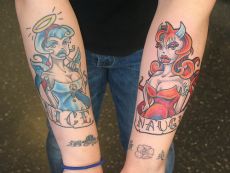
Source:
By finding the brain mechanisms driving virtue and vice, we have also added subtlety to Smith's views. For example, we have identified why variations in a women's menstrual cycle affect her trustworthiness, and why high social status males are less likely to be cooperative and more likely to violate sharing norms. We have also shown that context matters. We are a highly adaptive species and what is appropriate in Guadalajara may be inappropriate in Kansas City.
So are humans moral or immoral? The biological answer is that we have evolved behaviors that increase our chances of survival and reproduction. When in a stable and safe environment with enough food in our bellies, having a biology of morality sustains our place in the community of humans who help ensure our biological imperatives. In highly stressful, resource poor environments, we'll step on whoever is in front of us if it helps us survive. The exceptions to this rule are the five percent of the population who I've found do not have an oxytocin response and are pathologically selfish like Madoff, and another few percent who are nearly pathologically virtuous like Mother Teresa. The rest of us vacillate between good and evil.
We're a complicated species--both moral and immoral as our environment and physiology dictate. But, mostly the moral dominates. Not so bad for a complicated big-brained mammal.
Subscribe to:
Comments (Atom)